To further advance the Special Initiative of "Visiting Enterprises and Expanding Job Opportunities" and help students stay abreast of the frontiers of industrial development and clarify their career paths, on October 10, 2026, led by Zhang Hang, Deputy Party Committee Secretary and Vice Dean of the School of Transportation, our school organized nearly 40 students—including all undergraduate students of the first cohort of the Low-Altitude Technology and Engineering program and student representatives from both undergraduate and postgraduate levels—to visit the Jiangsu Low-Altitude Flight Service Center (hereinafter referred to as "the Provincial Low-Altitude Center") for an on-site tour and exchange. This visit brought students into close contact with the front line of the low-altitude economy industry, built a bridge for communication between the school and the enterprise, and empowered students' growth and career development.
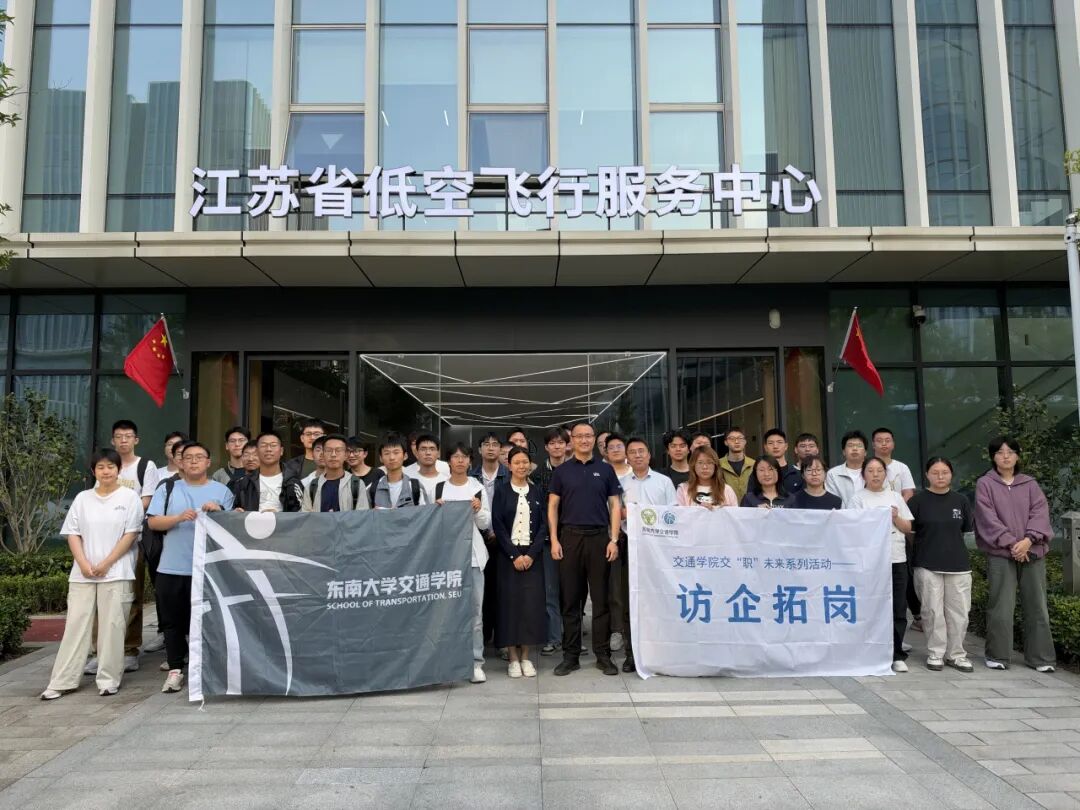
The Provincial Low-Altitude Center is a provincial-level low-altitude flight service agency authorized and operated under the Jiangsu Provincial Government. It has established China's first provincial low-altitude service platform to achieve integrated management of manned and unmanned aircraft in low-altitude airspace. The Center has innovatively developed a "one airspace, multiple parties" coordination mechanism, and is building a two-tier (provincial and municipal) low-altitude flight service system around the goal of "one standard, one platform, one set of rules, and one network." It provides flight users with whole-process services including flight application and declaration, route planning, and meteorological information, laying a solid service and support foundation for the high-quality development of Jiangsu's low-altitude economy.
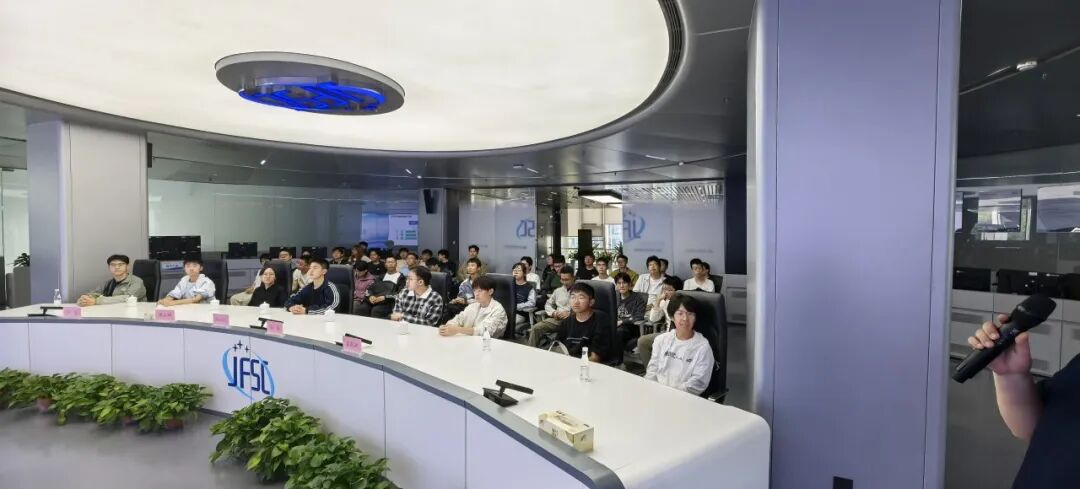
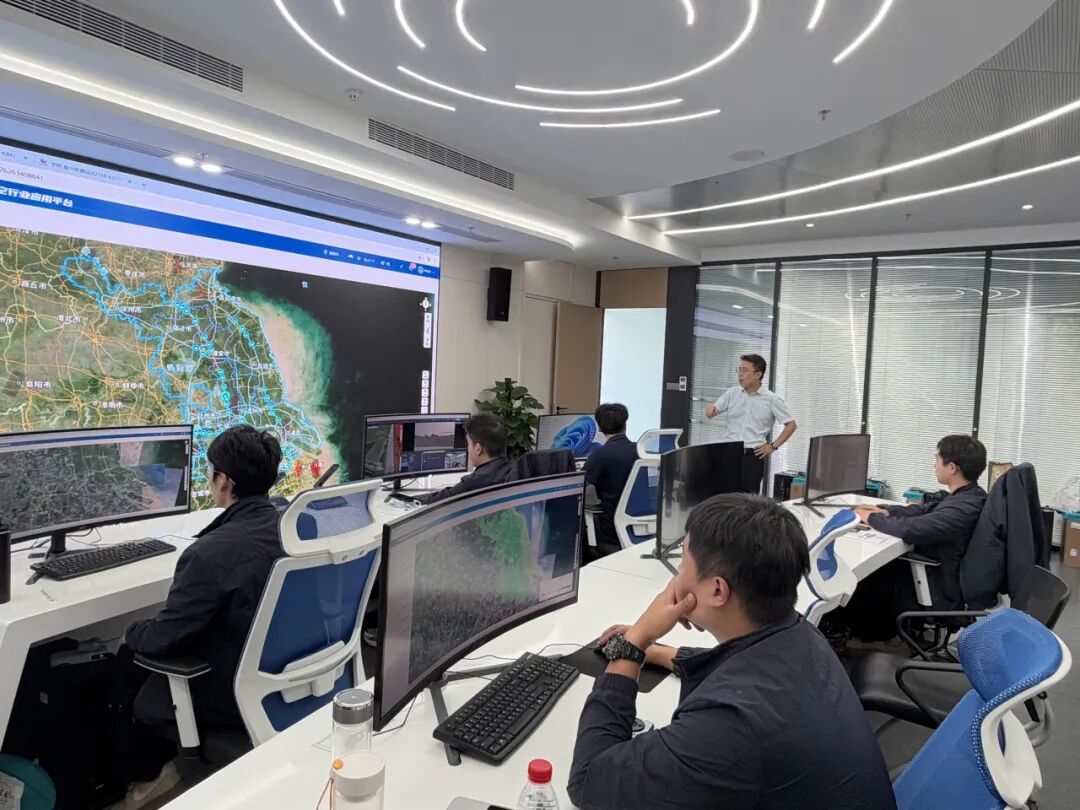
Guided by the Center's staff, the teachers and students first visited the Center's management platform. A giant screen displayed the real-time operational picture of low-altitude flights across the province in real time. The platform integrates multiple functional modules—including airspace information, flight dynamics, and surveillance and early warning—visually presenting the distribution of flyable airspace, controlled airspace, and electronic fences, and enabling real-time surveillance of the flight status of various low-altitude aircraft as well as compliance alerts. The intuitive technical demonstration and detailed explanations gave the teachers and students a comprehensive and profound understanding of the Center's core businesses and the platform's technological capabilities.
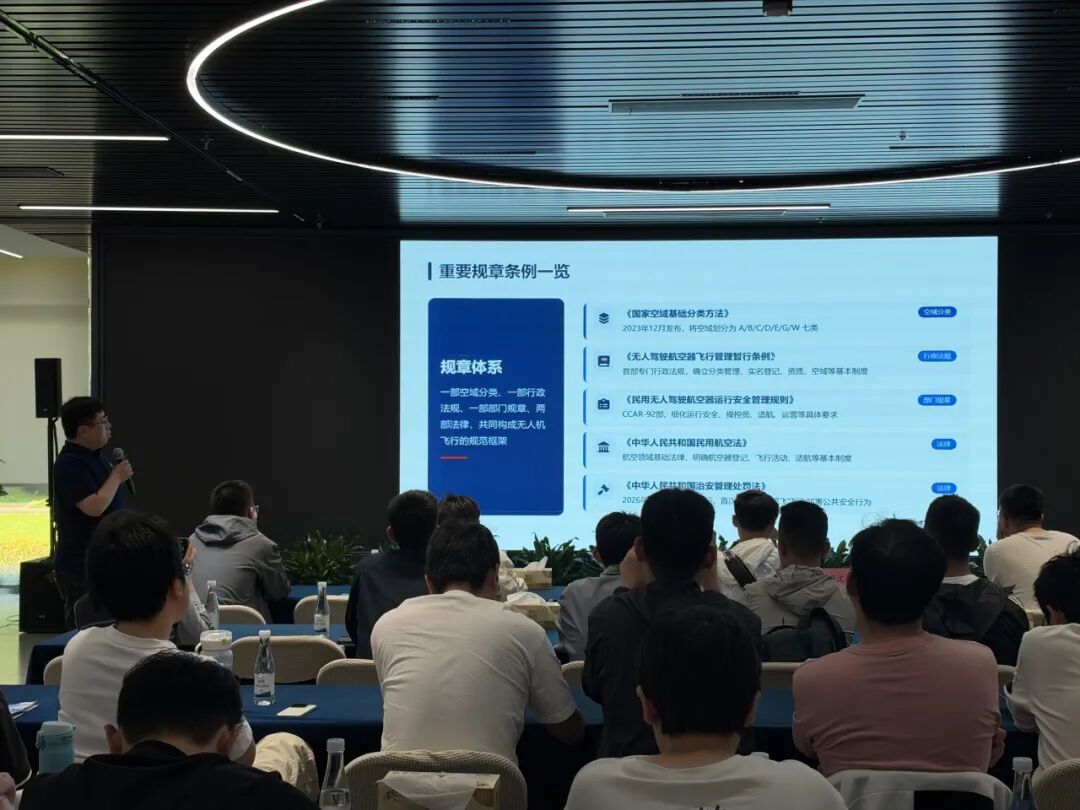
Subsequently, Wang Ting, Deputy Manager of the Flight Service Support Department of Jiangsu Aviation Industry Group Co., Ltd. (hereinafter referred to as "the Aviation Industry Group"), delivered a systematic briefing on UAV (unmanned aerial vehicle) management regulations and the requirements for UAV operator licenses. Focusing on the difficult and easily overlooked points that students often misunderstand in practical operations, he systematically reviewed such topics as the regulatory basis, real-name registration, airspace application, license application, and qualification management. During the Q&A session, students raised questions enthusiastically on issues such as cross-provincial flight control and the implementation of drone logistics applications. Wang Ting answered each question in detail, helping the students dispel misunderstandings and further strengthening their sense of responsibility for lawful and compliant flying.
Shao Xiang, Manager of the Low-Altitude Business Department of the Aviation Industry Group, focused on the real-world applications of drones, highlighting their practical achievements in highway scenarios. Relying on drone nests deployed along expressways across the province, low-altitude applications have been deeply integrated into business scenarios such as operations support, maintenance support, and emergency support, building an automated and normalized smart inspection system. On-site, a live demonstration was also given of a drone from the hangar at the Lishui East Toll Station on the Nanjing–Hangzhou Expressway conducting real-time monitoring of road conditions: the collected footage is transmitted back to the control center, where AI algorithms perform intelligent analysis and summarization of traffic conditions; during maintenance operations, the system can automatically identify issues such as slope debris according to customer needs, enabling intelligent work-order dispatching and closed-loop disposal.
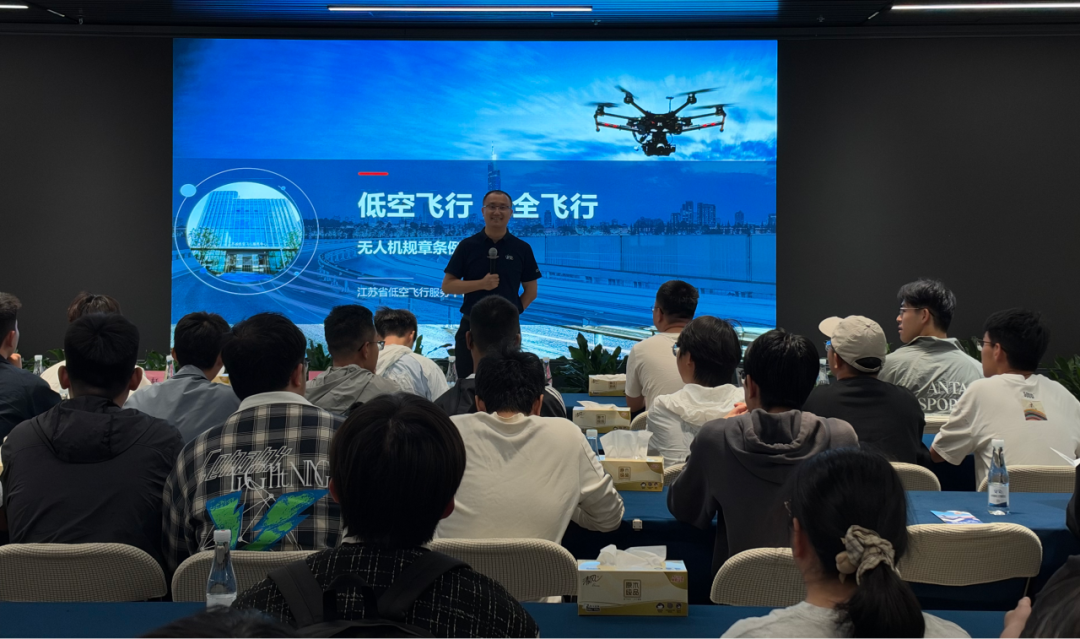
Finally, Chen Shangkai, General Manager of the Aviation Industry Group, introduced the integrated application system of the low-altitude economy, drawing on the series of drones independently developed by the team, including autonomous takeoff and landing, hydrogen-powered multirotor, and hybrid fixed-wing models. The Group has deeply cultivated four major scenarios—maintenance inspection, operational traffic assurance, construction management, and emergency rescue—forming a development path of "intelligent equipment, systematic integration, AI-enabled decision-making, and coordinated system-based operations." In addition, in partnership with expressway management units and public security traffic police detachments in multiple cities, the Group has established a "one airspace, three parties; one road, unified flight" mechanism. In practical operations, drones arrive on average eight minutes earlier than ground forces, with the rate of proactive incident detection increased by over 90%. He emphasized that the development of the low-altitude industry must adhere to independent and controllable technology, concentrating efforts on overcoming key core technologies such as battery energy, and firmly consolidating the technological foundation for the industry's development.
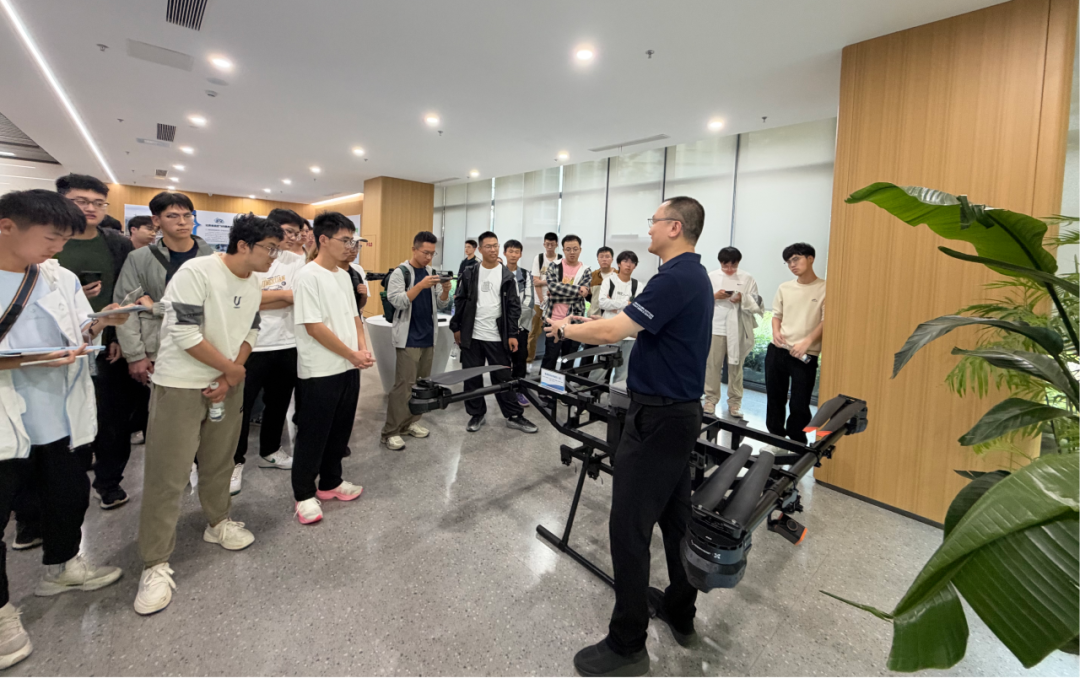
This study tour to the Provincial Low-Altitude Center not only gave the teachers and students a firsthand understanding of the technological frontiers, industrial ecosystem, and talent demands in the low-altitude economy, but also built a solid bridge for school-enterprise cooperation and alumni engagement. Going forward, the School of Transportation will continue to deepen school-enterprise collaboration through field visits to enterprises, alumni liaison, and other means, constantly expanding quality internship and employment opportunities, helping students achieve high-quality employment, and cultivating more outstanding professionals for the low-altitude economy and the transportation industry.